.jpg)
The growth of franchises in Brazil
In recent decades, franchising in Brazil has experienced a impressive growth.
Today, there are more than 195.8 thousand franchised units in operation, a number that has already left behind the difficult times of the pandemic and consolidated the sector as one of the engines of the economy (Agência Brasil).
But that growth is far from being a straight line to the top.
If we look closely, we will see that most franchise chains follow a predictable cycle of growth and maturity.
At first, the expansion accelerates, but at some point, the curve slows down. Growth becomes more difficult, the franchise reaches a Expansion plateau.
That's what we're going to investigate.
If we look at large networks, we will see the same phenomenon.
Franchises such as McDonald's, O Boticário and Ortobom They expanded less than 2% per year, while some They even shrunk, like OdontoCompany, which lost 17% of units in 2024.
This pattern of growth followed by stabilization is not new.
In fact, it follows a predictable cycle that can be demonstrated:
Seja F (n) The number of franchise units in the year n.
At the beginning (years 1 and 2), F (1) = a, F (2) = b (these values depend on the business - the can be an initial unit, for example).
Maximum expansion without restrictions could follow F (n) = F (n-1) + F (n-2).
As long as the franchise is able to recruit franchisees almost exponentially, we may have F (n) close to that relationship.
But as F (n) It becomes large and the market is sold out, the real F (n) Observed will start to stay under Of the calculation F (n-1) + F (n-2).
We can then introduce an adjustment factor that represents the saturation: for example, F (n) = F (n-1) + F (n-2) — g (n), where g (n) It's a growth “gap” term that grows when F (n) is close to the market limit.
In the early stages, g (n) ≈ 0 (no gap, full growth).
In advanced stages, g (n) Increase, reduce F (n) Until eventually F (n) — F (n-1) (the annual increase) tend to 0 when it reaches the final plateau.
Esse g (n) encapsulates the limiting effects and could be modeled, in future studies, based on variables such as the remaining unserved population and the closing rate.
Franchise growth cycle
If we analyze the trajectory of successful franchises, we will notice that almost all of them follow a sigmoidal curve - the famous “S” of the business life cycle.
- Introduction: Few units, slow growth, model validation.
- Expansion: Growth accelerates. Franchisees multiply new units, the market is open, and the network is growing rapidly.
- Accommodation: Growth slows down. The franchise already has stores in almost every large and medium-sized city.
- Plateau (or Decline): The market saturates, growth stops. Some networks lose relevance and shrink.
The big question is: what causes this saturation?
Why do franchises stop growing?
There are several reasons for this, let's go to the main ones:
Saturation
In the beginning, there are a lot of expansion opportunities, but over time, the franchise You simply run out of room to grow.
The most obvious market has already been conquered, and opening new units means stressing logistics chains or overlapping stores.
That's what happened with O Boticário and McDonald's, who today have Marginal growth, because they already are in almost every possible city (PEGN).
Competition
The more a franchise grows, the more competitors appear.
What was once a blue ocean is starting to turn red.
Networks such as Subway they grew a lot in the 2010 years, but then they faced Strong competition, leading to closures and restructuring.
Economics
Franchises need investment to expand. When interest rates are high or market confidence falls, Fewer people want to open new units.
The slowdown in franchising in 2024 coincided with a period of Most expensive credit in Brazil, making it difficult to attract new franchisees.
Management and Quality
Fast growth requires structure and support.
Many chains grow too fast and are unable to maintain the standard, leading to dissatisfied franchisees, store closures and chain shrinkage.
Change in Strategy
Many brands, upon reaching a certain size, prefer to grow in quality, not quantity.
The president of ABF himself pointed out that The focus now is on increasing the profit of existing units, instead of opening new ones at any cost (PEGN).
Who knew how to keep growing
Some networks find ways to Break the plateau and keep growing.
Cacau Show
Even with more than 4,600 stores, the Cacau Show is growing +10.6% per year. How?
- Betting on microfranchises and kiosks, expanding its presence.
- Investing in multifranchised — 60% of franchisees have more than one unit.
- Creating new products and experiences, keeping the brand always relevant.
The Best Açaí
The network arrived at 900 units in Brazil and before reaching the plateau here, it has already started Expand to other countries (PEGN).
Natura
Natura realized that its traditional model had limits and, instead of opening its own stores, Adopted franchising.
Result? Nearly 1,000 units opened in a few years.
Franchise Growth Patterns
How your network can overcome that same growth barrier
To overcome the Expansion Plateau, we are proposing a redesign process so that networks resume growth.
This is a strategic review, focused on realignment with the market and optimization for a new phase of growth.
The challenge of unlocking growth
We imagined a project structured in 5 major phases, each with clear deliverables focused on expanding the franchise's addressable market.
1) Diagnostics
- Positioning: Does the brand still have a clear differential? Does your purpose remain attractive to franchisees and customers?
- Franchisee Experience: Satisfaction diagnosis and challenges faced by current units.
- Financial: Evaluation of the financial health of franchisees.
- Operational: Identification of the market in which it operates and the mix of products/services.
- Benchmark: Comparison with networks that broke similar barriers.
2) Franchise Redesign
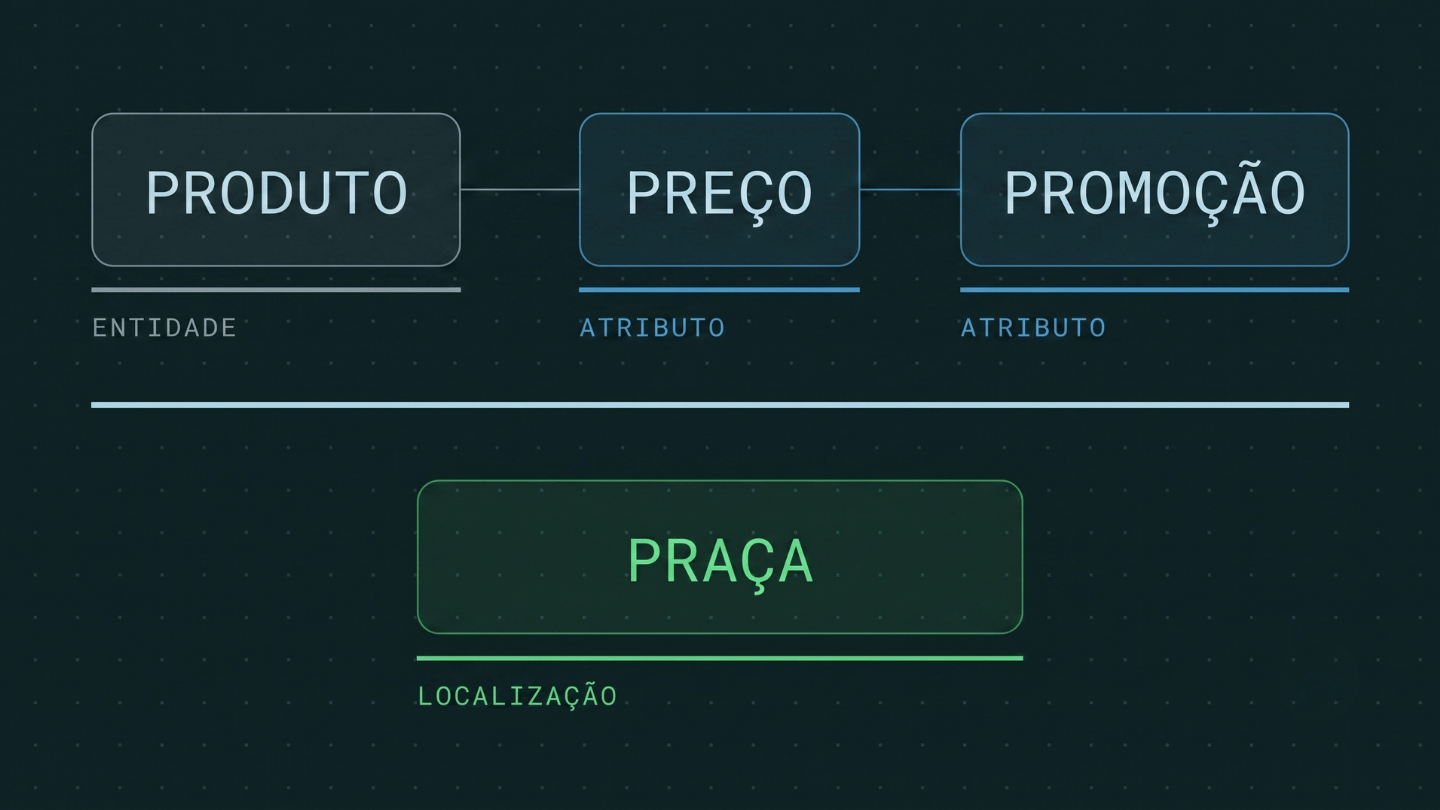
Based on the diagnosis, strategic interventions are carried out in 4Ps to expand the addressable market.
- Product: Update of the mix, improvement of the offer and competitive differentiation.
- Price: Evaluation of the pricing model and its attractiveness for different franchisee and consumer profiles.
- Square: Expansion model review (new formats? New regions? Hybrid models?).
- Promotion: Marketing strategies to increase brand traction and attract new franchisees.
3) Resumption of Expansion
- New formats: Exploration of new models, such as smaller franchises, kiosks, dark kitchens or digital formats.
- Legal aspects: Update of manuals, brand registrations, and contracts.
- Repositioning: Refinement of the franchise's storytelling to attract more qualified franchisees.
- Intelligent Geomarketing: Identification of regions with high market potential and lower risk of saturation.
- Transfer strategy: Not all franchisees will want to continue.
- Strategy for attracting new franchisees: Use of data and targeted campaigns to attract investors with an ideal profile.
- Continuous expansion: Progressive growth process, ensuring that the network expands smoothly.
4) Strengthening the performance of the units
Grow without losing quality and operational alignment.
- Scalable Support: Digitization of training, support and standardization of processes to give autonomy to units.
- Dashboard: Continuous monitoring of key indicators (KPIs) to identify struggling units and act quickly.
- Automation: Implementation of technological tools to reduce the operational burden and increase the franchisor's efficiency.
5) New commercial and operational strategy
Clear goals and indicators.
- Redefining the brand strategy to regain traction in the market.
- Planned and sustainable expansion, with qualified franchisees.
- Optimization of the existing network, ensuring greater efficiency and profitability.
- Use of technology and data to support strategic and operational decisions.
Who must go through the process?
Every franchise undergoes well-defined growth stages.
Networks in an early phase of expansion
The franchise is expanding, but still on a manageable scale that allows for operational adjustments and refinement of the concept.
Losing speed between 10 and 33 units is a sign that the network has major challenges in its value proposition or business model.
This stage is the first major scale test, where management and operations must be well established to support broader growth.
Networks in a growth phase
Between 34 and 232 units, the franchise demonstrates a robust capacity for expansion, with operations in several locations and a strengthening brand.
There is a critical point where many networks stuck: the range between 34 and 55 units.
There are still markets available, operational efficiency issues can be a bottleneck.
Mature networks, with more than 233 units
At this scale, the franchise network already has a significant national presence.
Slowing down at this point is a sign that the brand is losing appeal to new franchisees, often due to a lack of differentiation in the market.
Then the operational challenges increase and, without strategic intervention, the network may stagnate.
The challenge is to prepare it to become a large franchising corporation with an international reach or a dominant presence in the domestic market.
If your franchise is in any of those moments, this could be the path to unlocking growth and preparing your network for the next level.
References
Brazil Agency. Franchise revenues grew by 13.8% in 2023. ABF data on the number of units (195.8 thousand in 2023, +7.8% vs 2022).
PEGN — Franchises earned R$ 185 billion in 2021. It reports a total of 170,999 units in 2021 (+9.1% vs 2020, +6.2% vs 2019), indicating ~161 thousand in 2019.
PEGN — Franchises grow 13.5% in 2024, says ABF. It points to stability in the number of networks (~3.3 thousand) and a growth of units of only 0.9% in 2024 (197,709 units).
PEGN — 50 largest franchises in Brazil, 2024. The ABF ranking shows: Cacau Show 4661 stores (+10.6%), O Boticário 3746 (+1.5%), McDonald's 2704 (+1.6%), Ortobom 2387 (+0.3%), OdontoCompany down -17%.
PEGN — 50 largest franchises in Brazil, 2024. It cites the highest growth of the year: The Best Açaí (+ 54%), Milky Moo (+ 53.7%), Lavateria (+ 49.7%), with ~900 units sold and the beginning of the internationalization of The Best Açaí.
PEGN — Franchises grow 13.5% in 2024, says ABF. Statement by the president of ABF regarding the focus of the networks on increasing the profit of existing units (years of consolidation), after periods of post-pandemic survival and recovery.
Organization Brazil — Franchise sector has record revenues in 2022. ABF Report: 184,354 units in 2022 (+7.8% compared to 170,999 in 2021), an increase of 14.5% compared to 2019.
Wikipedia. Franchise maturity cycle. It defines phases: Formatting, Expansion, Consolidation, Maintenance — analogous to the product life cycle (without primary sources, but a widespread concept).