.jpg)
Have you ever heard the saying Do oxen that arrive first drink the cleanest water?
It pretty much sums up what happens when you enter new markets early.
When a new opportunity emerges, whether it's a promising neighborhood, an emerging technology, or a cultural trend, those who arrive first encounter less competition, more chances to stand out in an open environment to explore.
But to be that “ox that comes first”, luck is not enough.
Strategy is needed, and that's where the Geomarketing It is an essential tool for mapping, understanding and conquering new markets.
New markets
Emerging markets can be compared to newly built cities.
In the beginning, they are open spaces with few rules and many possibilities.
For companies, this means the chance to shape interactions, build networks, and even define the rules of the game.
Geomarketing works as a map for these “cities”, helping you answer fundamental questions:
- Where are the opportunities?
- Who is already there?
- How can I position myself to be relevant?
For example, consider the arrival of large supermarket chains in interior cities.
You know that they used data to identify population growth, changes in purchasing power, and gaps in the market came out ahead, winning over consumers before the competition.
Now it's your turn to do the same.
What is Geomarketing and why does it matter?
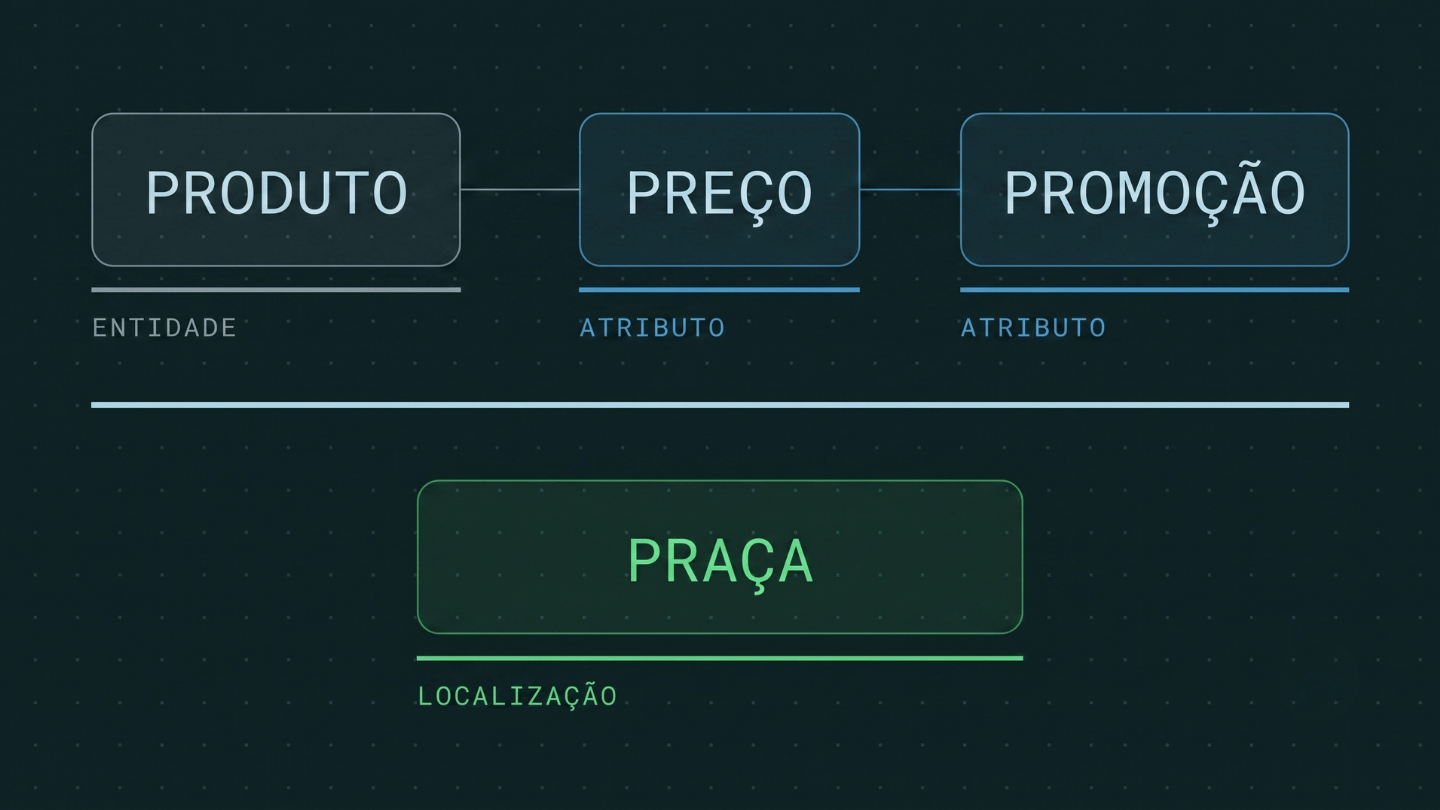
Geomarketing is the use of geospatial data to create business strategies, combining location analysis, demographic, and behavioral data to answer:
Where is it worth investing?
Intensity maps
They identify areas with a high density of consumers or poorly met needs.
Competition analysis
It helps to understand who is already in the region and what their weaknesses are.
Demand forecasting
It crosses historical data and current trends to predict growth potential.
Brand that comes first...
- Establish identity: Being the first brand in a new region creates a strong bond with local consumers.
- Build strategic networks: You can form partnerships with regional stakeholders before competitors realize market potential.
- Gather valuable information: Direct observation of local needs allows for quick adjustments to the offer.
Practical example: Giraffes and their market strategy
The Giraffas chain, founded in 1981 in Brasilia, has established itself as a genuinely Brazilian brand in the fast-food segment.
Although smaller compared to giants like McDonald's, Burger King, and Bob's, Giraffas found its niche by offering a menu that combines fast-food classics with traditional Brazilian cuisine.
With approximately 400 establishments spread across the country, the network seeks different strategies to expand its presence, such as focusing on cities with less than 50,000 inhabitants.
Adapting the menu to the regional palate is a competitive advantage. By offering dishes such as traditional rice and beans and grilled options, the chain meets local preferences, something that is not always a priority for multinationals in the sector.
Despite its smaller size compared to McDonald's, Burger King, and Bob's, Giraffas has adopted an intelligent strategy when focusing its efforts on small cities.
caution
Not every open market is good, those who arrive early are also at risk:
- Unexplored market: The public may not be ready for your offer
- Uncertain investment: Entering early requires more capital and may not generate immediate return
Strategies for drinking the cleanest water
If you want to be the pioneer taking advantage of the best of a new market, you need a plan.
Look for signs of growth
Growing secondary cities? New cultural poles emerging?
Use data to identify these patterns before competitors.
Focus on micro-markets
Sometimes the big opportunity lies in specific niches.
An up-and-coming neighborhood or underserved consumer segment may be the gateway.
Create a local connection
Use personalized campaigns to engage specific communities.
Be the “neighbor” before being the “big player”.
Keep your eyes on the future
Never settle down.
What's new today will be the old tomorrow, keep monitoring emerging markets.